


In the complex and highly competitive world of international road freight, the pursuit of efficiency is a relentless driver of innovation. For forward-thinking companies like Hard Trans Kft, efficiency is no longer a singular goal defined solely by cost reduction. Instead, it has evolved into a strategic triad: maximizing operational reliability, minimizing environmental impact, and enhancing economic performance. The key to achieving this balance lies in a deliberate and data-driven approach to fleet investment and renewal.
For Hard Trans Kft, a prominent player in European road transportation, this strategy is embodied in a continuous cycle of technological adoption. While the industry buzzes with talks of an imminent revolution in alternative fuels, Hard Trans demonstrates that significant, immediate gains are being achieved through the intelligent optimization of existing technologies.
The Calculated Pursuit of Incremental Gains
Rather than making speculative leaps into unproven technology cycles, Hard Trans Kft has focused on investing in the most advanced and efficient internal combustion engines available today. The recent integration of state-of-the-art Volvo FH Aero trucks with I-Shift automated transmissions is a prime example of this philosophy in action.
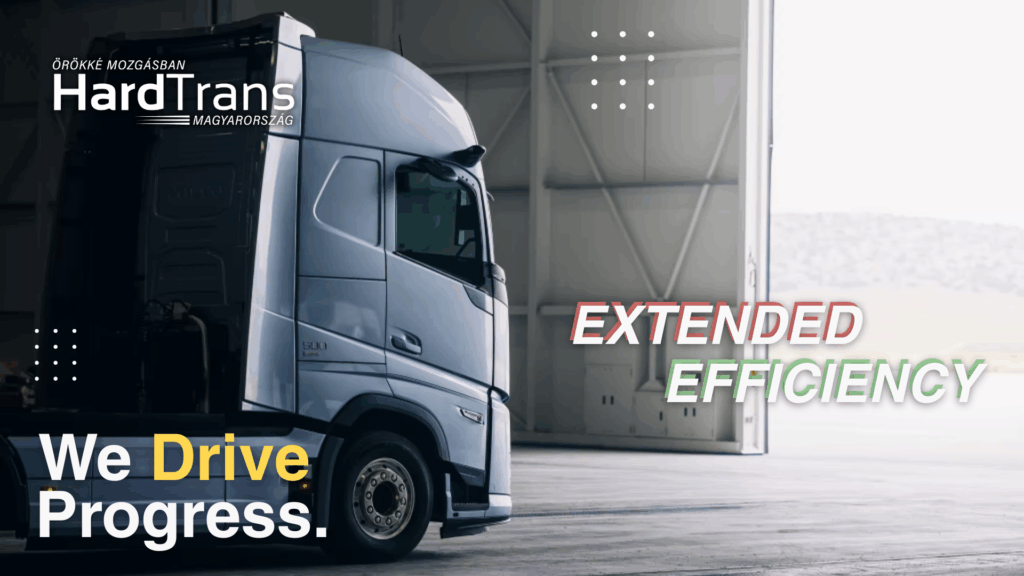
This investment is far from conservative; it is a calculated move backed by substantial engineering and real-world data. The Volvo FH’s aerodynamic profile, featuring redesigned roof deflectors, side skirts, and bumper spoilers, is engineered to significantly reduce drag—a primary source of energy waste at cruising speeds. According to Volvo Trucks’ own white papers and wind tunnel testing, these aerodynamic enhancements can contribute to a double-digit percentage reduction in fuel consumption under optimal conditions.
Paired with this is the proprietary I-Shift transmission, which represents the pinnacle of automated gear-shifting technology. It continuously analyzes grade, weight, and road speed to select the perfect gear for maximum fuel economy, eliminating the inefficiencies of manual shifting. The synergy between the FH Aero’s reduced drag and the I-Shift’s predictive intelligence creates a platform for tangible, measurable reductions in both fuel costs and CO₂ emissions on every kilometer of every journey.
The Infrastructure Dilemma: Navigating the Alternative Fuel Landscape
Hard Trans Kft maintains a vigilant watch on the development of alternative powertrains, including battery electric vehicles (BEVs), hydrogen fuel cells, and biofuels. The company recognizes its long-term potential to decarbonize transport. However, a responsible logistics provider must also consider the current stark realities of European infrastructure, particularly from a Hungarian operational base.
The challenge is not a lack of will, but one of scale and synchronization. A comprehensive study by the International Transport Forum (ITF) on decarbonizing transport highlights the immense investment required for supporting infrastructure. For electric trucks, this means a continent-wide network of megawatt-capable charging stations capable of charging heavy goods vehicles in tight operational windows. For hydrogen, it requires not only refueling stations but an entire “green” production and distribution ecosystem that is still in its infancy.
The current patchwork of charging and refueling points across Europe presents a formidable operational barrier for a company running reliable international schedules. Deploying a mixed fleet of combustion and alternative-fuel vehicles today could create logistical complexities and undermine the very reliability that is Hard Trans’s cornerstone. The “chicken-and-egg” problem, where a lack of vehicles inhibits infrastructure investment, and a lack of infrastructure inhibits vehicle adoption, is a central consideration in the company’s strategic timeline.
A Bridge to the Future
Therefore, Hard Trans Kft’s position is not one of resistance, but of prudent timing. The company views its investment in ultra-efficient internal combustion trucks not as an endpoint, but as a crucial bridge technology.
These new trucks deliver immediate carbon footprint reduction and cost savings, which is an environmental and economic win today. Simultaneously, this strategy allows the industry the necessary time to mature alternative technologies and, just as critically, for the requisite infrastructure to be built at a scale that supports seamless international operations.
By choosing partners like Volvo, which is itself a leader in developing both electric and fuel cell trucks, Hard Trans ensures it is aligned with a manufacturer at the forefront of both present and future solutions. This positions the company to pivot at the optimal moment, when the alternatives are not just technologically viable, but also logistically pragmatic.
In conclusion, Hard Trans Kft’s fleet renewal strategy is a masterclass in pragmatic sustainability. By harnessing the proven, cutting-edge efficiency of modern trucks like the Volvo FH Aero, the company solidifies its competitive edge, reduces its environmental impact immediately, and builds a solid, data-informed foundation from which to embrace the energy transition of tomorrow, precisely when the time is right.
Written by: Davy van Loon, MBA
CEO Hard Trans Kft.
More info: www.hardtrans.eu


